Choosing China’s top Contact Spring manufacturers requires more than scanning catalogues or comparing low prices. A reliable supplier should demonstrate practical experience, stable production, and clear technical communication. This guide examines manufacturers through material control, tooling capability, dimensional accuracy, testing methods, and customer support.
Small details matter. A spring made from stainless steel, phosphor bronze, or music wire can behave differently under repeated compression. Wire diameter, coil spacing, free length, and working load must match the application. Experienced manufacturers should explain these factors before production begins. They should also provide drawings, samples, inspection records, and traceable material information.
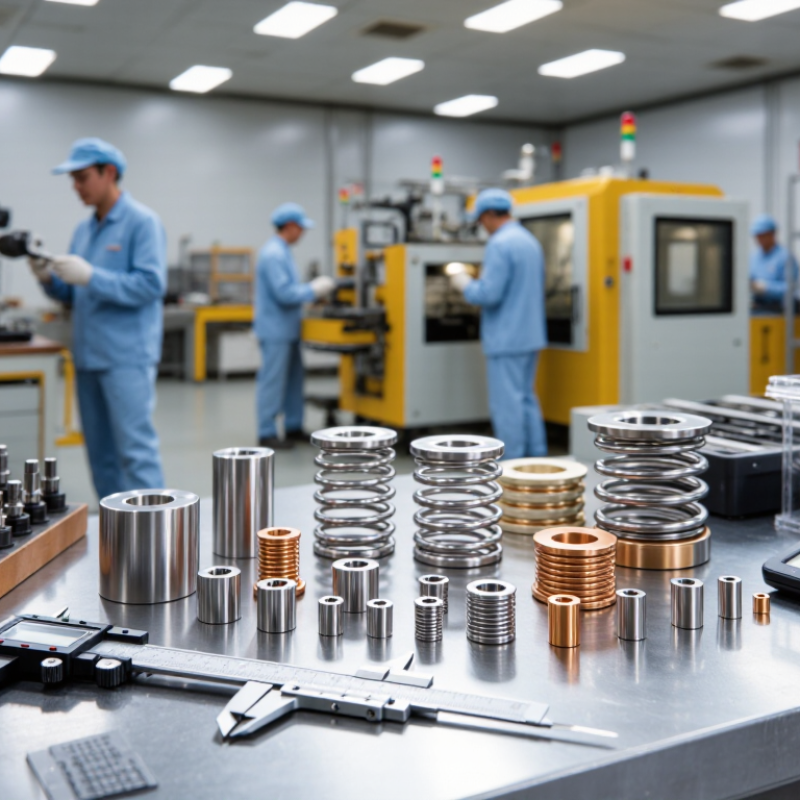
Factory visits can reveal useful evidence. Look for organized tooling areas, calibrated measuring equipment, clean assembly tables, and protected finished goods. Ask how workers check spring force at different compression heights. Request sample data, not only polished photographs. ISO certification may support credibility, but it cannot replace product verification.
There is no universal “top” manufacturer. A supplier may excel at miniature electronic springs but struggle with heavy industrial volumes. Another may offer excellent prototypes but lack dependable mass-production controls. This distinction is easy to miss.
The following overview compares leading Chinese manufacturers by technical expertise, production capacity, quality consistency, customization ability, and communication reliability. It also considers lead times, packaging, export experience, and after-sales response. Some information may change as factories expand or update equipment. Therefore, buyers should confirm current capabilities directly before placing a purchase order. A careful comparison reduces risk and helps identify a Contact Spring partner suited to real operating conditions.
Contact springs are small conductive components that maintain electrical contact under movement, vibration, or changing pressure. Their coiled or formed metal structure creates a controlled force between two connection points. This simple action keeps current flowing when surfaces shift slightly. They are commonly found in battery compartments, switches, connectors, sensors, lighting equipment, and compact electronic devices.
In practical product inspection, spring geometry matters immediately. A spring that is too soft may lose contact during vibration. One that is too stiff can damage a battery terminal or deform a housing. Engineers usually assess wire diameter, coil spacing, free length, compression range, and electrical resistance. Copper alloys and stainless steels are frequent choices. Surface plating may improve conductivity and corrosion resistance. Testing should include repeated compression, temperature changes, vibration, and salt exposure when necessary.
Reliable contact spring manufacturers need more than forming equipment. They must control tolerances, material traceability, tooling wear, and batch consistency. A useful quality report should show force measurements at specified working heights, not only visual inspection results. I have found that small dimensional changes can affect assembly more than expected. That detail is easy to overlook. It deserves another review before production approval. In some designs, simulation predicts performance well, but physical testing still reveals unstable contact or unexpected fatigue.

Evaluating China’s contact spring manufacturers requires more than comparing unit prices. Start with engineering capability. Ask how the factory controls wire diameter, coil spacing, free length, and contact force. These details affect conductivity, fatigue life, and assembly consistency. A reliable manufacturer should provide material certificates, dimensional reports, and force-displacement test data. Request samples made with the same process as mass production. Polished samples can hide production weaknesses.
Factory experience also matters. Review similar applications, production equipment, inspection methods, and corrective-action records. Check whether operators use calibrated microscopes, force gauges, and optical measuring systems. A supplier should explain its tolerance limits clearly, not simply promise “high quality.” During an audit, inspect storage conditions. Moisture, mixed materials, or careless packaging can damage spring performance before shipment.
Tips: Compare at least three suppliers. Verify test data independently. Ask for a small pilot order. Measure the springs yourself after delivery. Watch for vague answers. A low price may reflect thinner wire, weaker controls, or unfinished inspection. I have seen sourcing teams focus heavily on samples and overlook process stability. That mistake is easy to repeat. Keep drawings, approved samples, inspection criteria, and change-control rules in writing. Also discuss tooling ownership and replacement procedures early. Good communication helps, but documented evidence is more dependable.
China Top Contact Spring Manufacturers?
Chinese contact spring manufacturers serve diverse industries, from battery holders and relays to automotive connectors and medical instruments. Their strongest advantage is product specialization. Some factories focus on miniature springs for compact electronics. Others produce high-cycle contact springs for switches, sockets, and industrial controls.
In factory evaluations, I usually examine material control, tooling accuracy, and contact resistance records. Common materials include stainless steel, phosphor bronze, and copper alloys. Plating options may include nickel, tin, or silver, depending on conductivity and environmental requirements. Manufacturers with progressive stamping lines can produce consistent shapes at high volume. CNC forming is more suitable for complex profiles or smaller batches.
Reliable suppliers provide drawings, tolerance reports, and sample approval records before mass production. Quality systems such as ISO 9001 are useful, but certificates alone prove little. Ask for spring-force testing, fatigue data, and traceable raw-material records. This is where some comparisons become difficult. A low unit price may hide expensive tooling changes or unstable plating quality. I have also seen attractive samples fail after repeated compression. That mistake is easy to miss.
For automotive applications, suppliers with stronger process control may support stricter validation and endurance testing. Electronics manufacturers often value miniature dimensions and stable conductivity. Custom tooling remains a practical specialty among many Chinese factories, especially when buyers provide clear drawings and realistic tolerances. Some suppliers still need improvement in technical English and documentation speed. Clear communication matters.
When evaluating China’s top contact spring manufacturers, manufacturing standards matter more than polished sales language. A reliable supplier should operate a documented quality system, such as ISO 9001, with controlled drawings, approved materials, and recorded process changes. Material certificates should identify the alloy, temper, batch number, and supplier source. This traceability becomes valuable when a spring loses contact force after repeated compression.
Quality control should cover wire diameter, free height, coil geometry, electrical resistance, and surface finish. Calipers alone are not enough. Optical measurement systems can inspect small bends and pitch variations, while force testers verify load at defined working heights. For plated springs, inspectors should check coating thickness, adhesion, and corrosion resistance under suitable test conditions. Sampling plans must be clear, but 100% inspection may be necessary for critical dimensions.
Ask for capability data, calibration records, inspection reports, and corrective-action evidence. A serious manufacturer can explain what happened when a batch failed, not merely promise perfection. That matters. However, even strong systems have weak points. A supplier may measure dimensions accurately but overlook packaging damage during transport. Real production experience shows that spring performance also depends on assembly pressure, contact design, and storage humidity. Trial runs, endurance testing, and customer-side validation should therefore accompany factory inspection. The best decision comes from verified evidence, repeatable results, and honest discussion of remaining risks.
Selecting the right contact spring supplier in China requires more than comparing unit prices. The ISO Survey 2023 identifies China as the largest holder of ISO 9001 certificates, but certification alone cannot prove production capability. Request material certificates, drawing control records, and recent inspection data. Confirm whether the factory controls forming, heat treatment, plating, and final testing internally.
Ask for measurable evidence. A reliable supplier should report spring force, free height, fatigue life, and electrical resistance using defined test conditions. Review samples from at least three production lots, not one carefully prepared batch. UN Comtrade data under HS 7320 can help assess China’s spring export activity, although it does not separate contact springs from other spring products. That limitation matters.
Inspect the factory when possible. Look for clean feeding systems, calibrated force testers, traceable gauges, and labeled material racks. Discuss tolerances early. A supplier that accepts every requirement without questions may be overlooking manufacturing risks. Request a capability study, such as Cpk data, for critical dimensions. I prefer documented corrective actions over attractive presentations.
Price can mislead.
The 2024 Global Metal Stamping Market analysis by Grand View Research highlights rising demand for precision components in electronics and vehicles. This pressure may encourage faster output, but speed can increase burrs, plating variation, or unstable spring force. Ask how process changes are approved and how nonconforming parts are isolated. I would also test communication during sampling. Slow, vague answers before production rarely improve afterward. My own caution is simple: a technically strong supplier may still be unsuitable if its documentation and response discipline are weak.
| Evaluation Dimension | What to Verify | Practical Selection Benchmark | Recommended Evidence | Suggested Weight |
|---|---|---|---|---|
| Material Selection | Confirm electrical conductivity, spring properties, corrosion resistance, operating temperature, and compatibility with the mating contact. | Material should be selected from a controlled specification. Common options include copper alloys for conductivity and stainless steel for higher strength or corrosion resistance. | Material certificate, applicable ASTM/EN/JIS specification, lot traceability, and compliance declaration. | 15% |
| Contact Force and Deflection | Check initial force, working deflection, maximum deflection, contact pressure, and force retention after repeated cycling. | Supplier should provide a force-versus-deflection curve and test results at the actual operating stroke and temperature. | Force-displacement report, calibrated test equipment, inspection plan, and approved sample measurements. | 15% |
| Dimensional Capability | Evaluate wire diameter, coil diameter, free height, pitch, mounting features, and dimensional repeatability. | Critical dimensions should be defined on the engineering drawing with measurable tolerances. Do not accept unspecified tolerances for fit-critical features. | Inspection report, first-article inspection record, coordinate or optical measurement data, and control plan. | 12% |
| Electrical Performance | Verify contact resistance, current-carrying capability, voltage drop, and stability after environmental exposure. | Acceptance limits should be agreed from the application requirements and measured using a defined test current, force, temperature, and surface condition. | Contact-resistance records, electrical test method, sample size, and test-equipment calibration records. | 15% |
| Surface Finish and Plating | Check plating type, thickness, adhesion, porosity, solderability, wear resistance, and galvanic compatibility. | Plating requirements should specify the material, minimum thickness, test method, and functional areas. Gold, tin, nickel, or other finishes must be matched to the electrical and environmental application. | Plating certificate, thickness test report, adhesion test, visual standard, and restricted-substance declaration. | 10% |
| Fatigue and Reliability | Assess cycle life, permanent set, force loss, vibration resistance, thermal aging, and corrosion performance. | Reliability testing should reproduce the real stroke, frequency, load, temperature, humidity, and electrical conditions instead of relying only on a generic cycle claim. | Reliability protocol, before-and-after force data, failure criteria, environmental test records, and failure-analysis report. | 15% |
| Quality Management | Review process control, incoming inspection, in-process inspection, final inspection, nonconformance handling, and corrective action. | A documented quality system, batch traceability, defined sampling plans, and formal corrective-action procedures should be in place before mass production. | Valid ISO 9001 certificate where applicable, process flow, control plan, inspection records, and corrective-action examples. | 10% |
| Compliance and Documentation | Confirm restricted substances, material declarations, packaging requirements, labeling, and export documentation. | Documentation should address applicable RoHS, REACH, conflict-minerals, packaging, and customer-specific requirements. | Declaration of conformity, material declaration, safety data where relevant, packaging specification, and lot labels. | 5% |
| Engineering and Sampling Support | Evaluate drawing review, design-for-manufacturing feedback, prototype speed, tooling control, and engineering communication. | Supplier should identify risks before tooling, clarify unclear requirements, provide samples for approval, and control design changes through written procedures. | Design review notes, prototype inspection report, sample approval record, tooling maintenance plan, and engineering change history. | 8% |
| Capacity, Lead Time, and Cost | Compare tooling cost, piece price, minimum order quantity, production capacity, lead time, logistics, and continuity planning. | Choose the supplier with the best verified total cost and delivery reliability, not simply the lowest quoted unit price. | Formal quotation, capacity statement, production schedule, on-time delivery history, packaging plan, and business-continuity measures. | 5% |
| Total Suggested Evaluation Weight | 100% | |||