Leave Your Message

China Best Industrial Carrier Tapes Manufacturers?

China Best Industrial Carrier Tapes Manufacturers? This question deserves more than a supplier list. Industrial Carrier Tapes hold, protect, and present surface-mount components during automated assembly. A weak tape can cause pocket deformation, component movement, static damage, or feeder jams. One tiny dimensional error can stop a high-speed line.

SEMI’s 2024 World Fab Forecast reports continued global investment in semiconductor manufacturing capacity. Yole Group’s 2024 Status of Advanced Packaging also highlights stronger demand for precise, reliable packaging systems. These trends raise the importance of carrier tape quality. Buyers should examine material stability, pocket accuracy, cover-tape sealing, antistatic performance, and reel compatibility. EIA-481 compliance matters. So do practical tests with the customer’s actual components and feeders.

Jan Vardaman, president of TechSearch International, has emphasized, “Packaging increasingly determines system performance.” Her point applies directly here. The tape is not merely a plastic strip. It is part of the production process.

China has many capable manufacturers. Their strengths vary. Some offer excellent tooling control, clean-room production, and fast customization. Others compete mainly on price. That difference becomes visible when a 0402 component shifts inside a pocket, or when a reel unwinds unevenly at 16 millimeters per second. No supplier is perfect. Even a polished catalogue proves little without inspection records, sample validation, and traceable quality data.

This guide compares China’s leading Industrial Carrier Tapes manufacturers through materials, tolerances, production experience, customization, certifications, delivery capability, and after-sales support. The ranking may require reflection, because the cheapest quotation is rarely the lowest production cost.

China Best Industrial Carrier Tapes Manufacturers?

What Are Industrial Carrier Tapes and How Are They Used?

China Best Industrial Carrier Tapes Manufacturers?

What Are Industrial Carrier Tapes and How Are They Used?

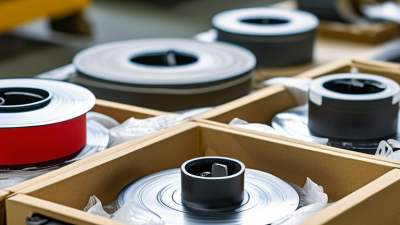
Industrial carrier tapes are structured packaging strips for transporting small electronic components. They contain precisely formed pockets that hold resistors, connectors, sensors, or integrated circuits. A cover tape seals each pocket, while automated feeders peel the cover and place components onto production boards. This process reduces manual handling and protects parts from dust, impact, and electrostatic discharge.

In practical production, pocket size and material stiffness matter greatly. A tape that bends too easily may cause feeding errors. A pocket that is slightly oversized can let a component rotate. I have seen packaging pass visual inspection but still jam during high-speed feeding. That is why reliable manufacturers check dimensional accuracy, tensile strength, sealing performance, and surface cleanliness. Materials may include embossed plastics, antistatic layers, or recyclable options, depending on component sensitivity and equipment requirements.

Tips: Match pocket dimensions to the component drawing, not a rough measurement. Test several full reels on the actual feeder. Check sealing force and peel consistency. Also inspect storage conditions, because heat and humidity can deform some tapes. One overlooked detail is reel winding tension. Too much tension can distort pockets. Too little can create feeding instability. Small tests prevent expensive line interruptions.
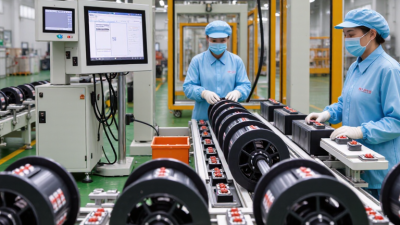

Industrial Carrier Tape Widths Used in Component Packaging

Carrier tapes are thermoformed or embossed packaging strips that hold electronic components in individual pockets for automated pick-and-place equipment. Common EIA-481 tape widths include 8, 12, 16, 24, 32, 44, 56, 72, and 88 mm. The appropriate width depends on the component package, pocket dimensions, cover-tape requirements, and feeder configuration.

Which Materials and Specifications Define Industrial Carrier Tapes?

China Best Industrial Carrier Tapes Manufacturers?

Industrial carrier tapes are defined by material choice, pocket geometry, and stable performance on automated assembly lines. Polystyrene is common for general electronic components because it forms clean, precise pockets. Conductive or dissipative grades help control electrostatic discharge. PET offers stronger dimensional stability and better resistance to heat, moisture, and handling stress. For sensitive parts, this difference matters.

Pocket width, length, and depth must match the component with controlled clearance. Excessive space allows movement. Tight pockets can damage fragile leads. Pitch accuracy also affects feeder timing, especially at high placement speeds.

Typical specifications include tape width, material thickness, sprocket-hole position, pocket spacing, and cover-tape compatibility. Do not overlook burrs. Small edges can interrupt feeding.

During line trials, engineers should inspect pocket deformation, peel force, surface cleanliness, and tape flatness. A reliable manufacturer should provide material traceability, dimensional reports, and ESD test data when required. Packaging conditions matter too. Humidity can change some materials and influence sealing behavior.

One specification sheet may still hide practical problems. Real testing remains necessary. Sometimes, a slightly thicker tape performs worse because the feeder path is poorly matched. Manufacturers should review the complete system, not only the tape.

How to Evaluate China’s Industrial Carrier Tape Manufacturers?

How to Evaluate China’s Industrial Carrier Tape Manufacturers?

China’s industrial carrier tape sector supports semiconductor, LED, and precision electronic packaging. SEMI reported global semiconductor manufacturing equipment sales of about 106.3 billion US dollars in 2023. This scale increases demand for stable packaging components, but volume alone proves little.

Evaluate manufacturers through measurable production evidence. Ask for material certificates, dimensional inspection records, and electrostatic-control test results. Carrier tape pocket depth, pitch, and cover-tape adhesion must remain consistent across long production runs. ISO 9001 certification helps, yet it cannot replace process data. Request sample lots from different production dates. Small variations often appear there.

A 2024 market analysis by Fortune Business Insights valued the global semiconductor packaging market at over 46 billion US dollars in 2023. That growth makes supplier reliability more important. Check mold maintenance, incoming-material controls, and batch traceability. Confirm whether the factory uses optical inspection or only manual checks. Manual checks have limits.

I would also review customer audit procedures, complaint response time, and corrective-action records. A technically confident supplier should explain failure rates without hiding uncomfortable details. Do not judge only by low pricing or polished factory photos. Test tape performance under humidity, heat, vibration, and repeated feeding. Some evaluations remain incomplete without actual line trials. That is the part many buyers underestimate.

China Best Industrial Carrier Tapes Manufacturers? - How to Evaluate China’s Industrial Carrier Tape Manufacturers?

Evaluation Dimension What to Verify Practical Industry Benchmark Recommended Evidence Suggested Weight
Material Selection Suitability of PS, PET, PVC, ABS, or other engineered materials for the component and packing process Material should provide adequate stiffness, dimensional stability, antistatic performance, and compatibility with the sealing process Material technical data sheet, safety data sheet, and application-specific sample approval 12%
Dimensional Accuracy Pocket length, width, depth, pitch, sprocket-hole position, tape width, and cover-tape fit Tolerance should be defined on the approved drawing; critical pocket and pitch dimensions commonly require tighter control than noncritical external dimensions Controlled drawings, first-article inspection report, calibrated measurement records, and capability data 18%
Format Range Ability to supply the required tape width, pocket geometry, reel format, and custom tooling Common carrier-tape widths include approximately 8–88 mm; specialized production may support wider formats, subject to equipment and tooling limits Machine capability list, tooling register, sample reels, and confirmed production drawings 8%
Mechanical Performance Resistance to deformation, cracking, tearing, and reel handling damage No visible cracks, collapsed pockets, broken sprocket holes, or unacceptable deformation after forming, winding, transport, and feeder testing Tensile or tear test records, forming validation, transport simulation, and feeder-run results 12%
Antistatic and ESD Control Surface resistivity, charge generation, and protection of sensitive electronic components The required resistance range depends on the component and packaging specification; performance must remain stable under the defined humidity and temperature conditions ESD test report, surface-resistance results, environmental-condition records, and packaging compatibility test 12%
Thermal Performance Stability during forming, sealing, storage, transportation, and downstream assembly The carrier tape should maintain pocket geometry and sealing performance throughout the customer’s validated process-temperature range Thermal-conditioning records, forming-temperature parameters, and post-exposure dimensional inspection 8%
Cleanliness and Appearance Control of dust, oil, burrs, black spots, scratches, flash, and foreign particles Product should meet an agreed visual inspection standard, with no contamination or defects that could affect component placement or sealing Inspection standard, sampling plan, clean-area procedures, defect photos, and batch inspection reports 8%
Compliance and Documentation Material and product compliance with applicable chemical, environmental, and customer requirements Documentation should address applicable RoHS and REACH requirements, restricted substances, material composition, and traceability Declarations of conformity, third-party test reports, material declarations, and change-control records 10%
Quality Management Process control, inspection frequency, nonconformance handling, corrective action, and traceability A documented quality system, defined inspection plans, lot identification, retained samples, and formal corrective-action procedures should be available Quality certificates, process flow chart, control plan, inspection records, and corrective-action examples 8%
Tooling and Engineering Support Design-for-manufacturing support, mold development, engineering changes, and sample turnaround The manufacturer should provide drawing review, design feedback, trial samples, and documented approval before mass production Engineering workflow, tooling-maintenance records, sample timeline, and approved pre-production samples 6%
Production Capacity and Lead Time Ability to meet forecast volume, minimum order quantity, replenishment requirements, and delivery schedule Capacity should be demonstrated using realistic production plans, equipment availability, material lead times, and defined contingency arrangements Capacity statement, production schedule, inventory policy, delivery records, and business-continuity plan 6%
Total Evaluation Weight 100%
Evaluation Method: Score each dimension from 1 to 5 based on documented evidence, multiply the score by the assigned weight, and compare at least three qualified manufacturers. A supplier should pass technical validation, compliance review, sample approval, and production-trial testing before commercial qualification.

What Manufacturing Standards and Quality Controls Should Buyers Check?

China Best Industrial Carrier Tapes Manufacturers?

Buyers should inspect manufacturing standards before comparing prices. ISO’s 2023 Survey recorded 1,265,216 ISO 9001 certificates worldwide, but certification alone does not prove stable carrier tape quality. Ask for the valid certificate, audit scope, and recent corrective-action records.

For electronic components, verify compliance with EIA-481 and IEC 60286-3. Check pocket pitch, cavity dimensions, cover-tape adhesion, reel geometry, and sprocket-hole accuracy. A supplier should provide inspection records for every production lot. Useful controls include calibrated vision systems, incoming resin checks, and statistical process control. Request capability data, such as Cpk results, rather than only “pass” statements. Moisture absorption and antistatic performance also need testing. ANSI/ESD S20.20 is a useful reference for electrostatic-control programs. A clean reel may still fail during high-speed placement. That detail is often missed.

Tips: Ask for three consecutive lot reports. Compare measured values with drawings. Check whether test equipment calibration is current. Request samples after aging, not only fresh samples. Confirm traceability from resin batch to shipment. Packaging labels should remain readable after handling.

One practical weakness deserves attention: many audits examine documents more carefully than production behavior. Buyers should observe a live inspection line, review rejected samples, and question repeated deviations. A supplier willing to show imperfect data may be more reliable than one showing only flawless charts.

How to Select the Right Chinese Supplier for Your Application?

How to Select the Right Chinese Supplier for Your Application?

Selecting an industrial carrier tape supplier in China starts with your component, not the lowest quotation. Define pocket dimensions, material, cover-tape compatibility, and required peel strength. Also specify whether your line needs antistatic control or cleanroom packaging. Small differences can cause feeding jams.

Ask for technical datasheets, inspection standards, and traceable batch records. A reliable manufacturer should explain dimensional tolerances, surface defects, and storage conditions clearly. Request samples made with your actual components. Test them on your equipment at normal speed, temperature, and humidity. Laboratory results alone can mislead.

Look beyond sample approval. Review production equipment, in-process inspections, and corrective-action procedures. Confirm how the supplier controls width, pocket depth, winding tension, and splice frequency. Clear communication matters when specifications change. Written drawings reduce expensive misunderstandings.

A factory audit is useful, even remotely. Ask to see measuring tools, packaging areas, and retained samples. Check whether one person owns your quality feedback. That detail matters.

Price can hide risk. An inexpensive tape may create component damage, stoppages, or excessive waste. Still, no supplier is perfect. A previous trial may pass basic feeding tests yet fail after long storage. Recheck aging performance before approving regular orders. Also confirm lead times, packaging labels, export documents, and backup capacity before production begins.