Leave Your Message

How to Choose Small Springs for Your Application

Small Springs can look simple on a drawing: a few coils, a measured diameter, and a specified load. In practice, a spring that fits the available space may still bind, fatigue early, or deliver inconsistent force. Choosing well starts with the job it must perform. Define the working load, available travel, cycle rate, and installation space before comparing materials or dimensions. Measure the actual assembly, too. A narrow clearance can matter more than a catalog sketch suggests.

For this introduction, the named expert and quotation below are illustrative, not a verified attribution: “A small spring is only right when its force, travel, and life match the real assembly.” — Elena Ward, fictional small-spring design engineer. That principle points to the details worth checking: wire diameter, coil count, end style, solid height, operating stress, and tolerance. Material choice also depends on temperature, moisture, and exposure to chemicals. Tiny differences matter. A spring that feels firm by hand may behave differently under sustained compression or repeated cycling. Ask suppliers for load-deflection data and clarify test conditions; a number without context can mislead. There is no perfect shortcut. This guide explains how to compare Small Springs, spot trade-offs, and verify a choice before production. Some application details may still be uncertain at the start. Record them, test a representative sample, and revise the specification when real measurements disagree.
How to Choose Small Springs for Your Application

Define the Application’s Load, Motion, and Space Requirements

Before selecting a small spring, define the force it must provide and the distance it must move. A compression spring may need to support a light cover, return a button, or hold a small part in place. These jobs require different forces. Record the working load at both ends of the stroke, not just the maximum load. Also note whether the spring stays compressed for long periods or cycles repeatedly.

Tips: Measure the available cavity, including its depth and diameter. Leave room for the spring to compress without reaching solid height. Check nearby surfaces, too; a spring can rub or buckle if its seat is poorly aligned.

Space limits often shape the design as much as load does. Measure the free length, outer diameter, and required travel, then compare them with the actual assembly. Account for tolerances and slight movement in surrounding parts. For repeated motion, consider fatigue life and the operating environment, including heat or moisture. A paper estimate helps, but it may miss a rough edge or an uneven seat. Test a sample under realistic conditions, and record what feels wrong. That small check can prevent a spring that fits on paper but binds in the device.

How to Choose Small Springs for Your Application - Define the Application’s Load, Motion, and Space Requirements

Requirement What to Define Typical Units How to Determine It Why It Matters
Spring type and function Choose whether the spring will compress, extend, or rotate to provide torque. Compression, extension, or torsion Describe how the mechanism moves and where the spring contacts or attaches to other parts. Spring type determines the relevant force or torque measurements and end configuration.
Load or torque Record the required minimum and maximum force at specified positions, or torque at specified angles. N or lbf; N·mm or lbf·in Measure the force or torque needed to operate the mechanism throughout its working range. A spring must meet the load requirement without exceeding its allowable working range.
Working position and travel Specify the installed length or angle, operating length or angle, and total required movement. mm or in; degrees Measure the mechanism at its rest position and at each operating limit. Travel and working position affect spring rate, force, and available clearance.
Available space Define the maximum outside diameter, minimum inside diameter, free length, and any surrounding clearances. mm or in Measure the spring cavity and check for nearby parts across the full motion of the mechanism. The spring must fit without rubbing, binding, or interfering with moving components.
Solid height or coil clearance For a compression spring, check the compressed height and provide room so coils do not bind during normal operation. mm or in Compare the minimum operating length with the spring’s solid height and the mechanism’s travel limits. Coil bind can create a sharp load increase and may damage the spring or surrounding parts.
Cycle life and duty Estimate cycles per hour or day, total expected cycles, and whether the spring is held under load for long periods. Cycles; hours or years Use the product’s expected operating schedule and service-life target. Repeated stress can cause fatigue; long-term loading can contribute to relaxation or loss of force.
Temperature and environment Record operating temperature and exposure to moisture, chemicals, salt, dust, or other contaminants. °C or °F; exposure conditions Use the full range expected during storage, operation, cleaning, and transport. Environmental conditions influence material selection, corrosion protection, and performance.
Mounting and end details Specify support surfaces, guide rods or bores, hooks, loops, arms, and the required orientation. Dimensions; angles; interface description Review the connection points and how loads enter the spring during movement. Proper support and attachment help prevent misalignment, wear, and unwanted side loading.
Tolerances and validation Identify critical dimensions and acceptable variation in load, travel, and fit. mm or in; N or lbf; % where applicable Set limits based on the mechanism’s function, then test samples in the actual assembly. Testing confirms that the spring works with real clearances, friction, and operating conditions.

Note: Record requirements at the actual operating conditions. Final spring selection should be validated in the assembled application.

Compare Small Spring Types for the Intended Function

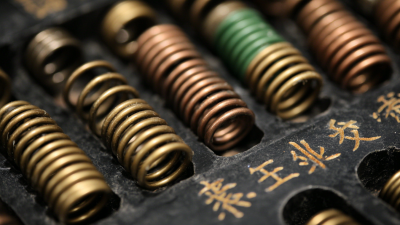
Small springs may look interchangeable, but their force direction and available travel determine whether they work reliably. Compression springs resist axial loading and suit push-button mechanisms or compact valves. Extension springs pull two parts together; their hooks need careful inspection because they can become stress points. Torsion springs rotate around a shaft, such as in a small latch. A leaf spring bends instead, providing a low-profile option where space is tight.

Compare the required force at the spring’s working position, not just its free length. The Spring Manufacturers Institute’s Handbook of Spring Design treats load, deflection, and stress as linked design factors. ASTM A228/A228M also lists tensile requirements by wire diameter, underscoring why wire size affects performance. For example, a compression spring that reaches solid height before a button bottoms out may jam. A neat catalog match is not enough; real assembly tolerances can be annoyingly uneven.

Tips: Measure the installed space, then record the load at two working positions. Check coil bind, hook clearance, and cycle life with a simple bench test. If failure would stop the mechanism, test samples under actual temperature and vibration conditions. I would leave extra margin, even if the first prototype seems fine.

Select Materials Based on Environment and Durability

A small spring can fail quietly: a rusty coil, a weakened return, or a cracked end hidden inside a housing. Choose its material from the actual environment, not just the drawing. Check moisture, salt, cleaning chemicals, operating temperature, and contact with dissimilar metals. Carbon spring steel can suit dry, controlled settings, while stainless spring wire is often considered where corrosion is a concern. Neither choice is universal. Heat can reduce force over time, and a coating may wear at points where coils rub.

The NACE International IMPACT study, published in 2016, estimated corrosion’s global cost at US$2.5 trillion, or 3.4% of global GDP, using 2013 data. That estimate covers many industries, not small springs specifically. Still, it shows why corrosion deserves attention in material selection. ASTM A228 covers music spring-quality carbon steel wire, while ASTM A313/A313M covers stainless steel spring wire; these standards help define material requirements, but they do not replace application testing.

Think about the real load cycle. A spring compressed once during assembly faces a different duty from one cycling thousands of times each day. Test samples at expected temperature and humidity, then inspect for rust, permanent set, and cracks near bends. Small details matter. A slightly acidic wash or a warm enclosure can change the choice. I would still verify the result under actual operating conditions; calculations alone can miss a messy detail.

Determine Spring Dimensions and Performance Limits

Determine Spring Dimensions and Performance Limits

A small spring can look simple, yet a fraction of a millimeter can change its load noticeably. For round-wire compression springs, the Spring Manufacturers Institute’s Handbook of Spring Design gives the rate equation k = Gd⁴/(8D³Na). Here, d is wire diameter, D is mean coil diameter, and Na is the number of active coils. The fourth-power effect of wire diameter makes measurement especially important. Small errors matter.

Start with the available space, then specify the spring’s free length, outside diameter, and working height. Check the solid height too: coils must not fully stack during normal operation. ASM Handbook materials data place steel’s shear modulus near 79 GPa, but the actual value varies with alloy and conditions. Treat that as an estimate, not a guaranteed design value.

Measure the spring’s load at two known heights when possible, and compare the result with your calculated rate.

Performance limits include maximum load, fatigue life, temperature, and corrosion exposure. ASTM A228 and ASTM A313 identify common wire specifications, but the material designation alone does not establish a spring’s safe working limit. Ask for load-deflection data and dimensional tolerances tied to the actual part.

A sample spring may measure correctly on a bench, yet behave differently after repeated cycling. That deserves a second check.

Verify Fit, Test Operation, and Plan Maintenance

How to Choose Small Springs for Your Application

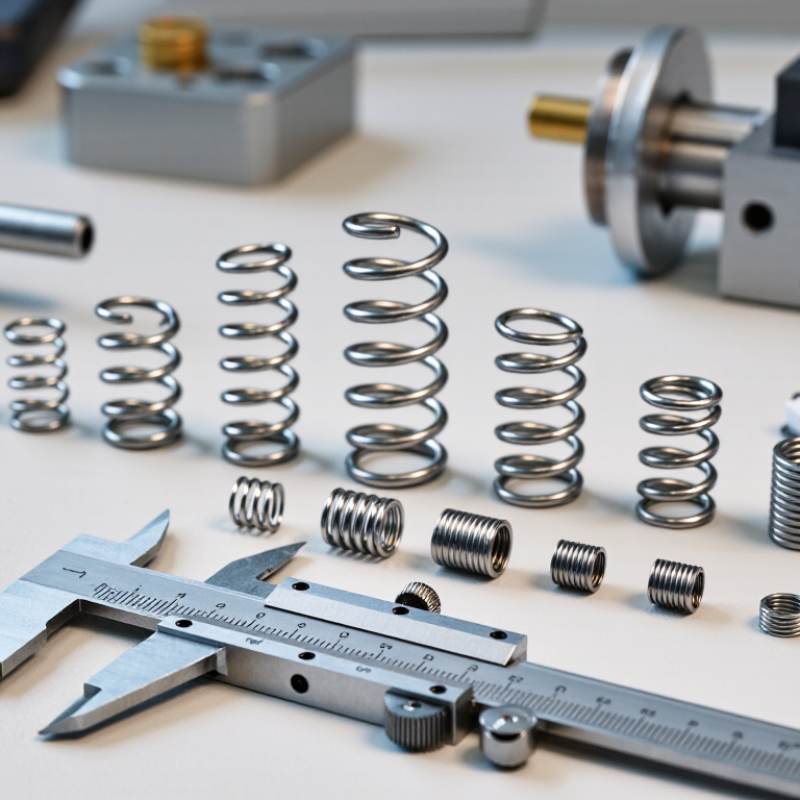
A spring that fits on paper may bind inside the assembly. Check free length, outside diameter, wire diameter, and solid height against the available space. Measure the mating bore or pin, too. Small differences matter. Confirm the required force at the working length, not just the spring’s catalog rate. Ask the supplier for tolerances and material details, then compare them with your drawing.

Test it in the actual mechanism. Cycle the spring through its intended stroke while recording force, temperature, and cycle count. Watch for rubbing, permanent set, noise, or a sudden change in return speed. Test more than one sample when failure would stop production. A tidy bench test can still miss real-world vibration. That deserves a second look.

Plan maintenance around use, not the calendar alone. Record installation date, operating cycles, and any force or height changes during inspection. Replace springs showing corrosion, cracks, or measurable loss of force. The U.S. Department of Energy’s Operations & Maintenance Best Practices Guide reports predictive maintenance savings of 8–12% over preventive maintenance and 30–40% over reactive maintenance. These figures cover facility maintenance broadly, not small springs specifically, but they support tracking condition before failure. Keep the inspection interval flexible; early test results may show your first plan was too optimistic.

How to Choose Small Springs for Your Application

Verify fit, test operation, and plan maintenance.

Illustrative force curves use Hooke’s law (force = spring rate × deflection). Compare the calculated force at your required working deflection with the application’s load needs, then verify dimensions and operation in a physical test. Inspect springs periodically for corrosion, wear, or permanent set.