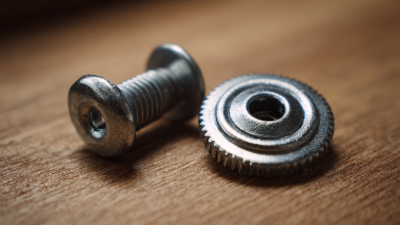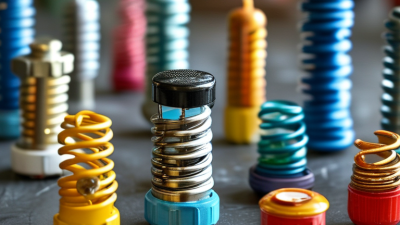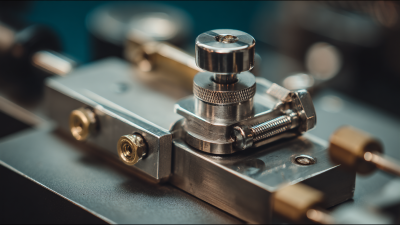
Selecting China’s best supplier requires more than comparing catalog prices or polished factory photos. A Special Spring-Loaded Button must perform reliably after repeated pressing, vibration, and exposure to dust or moisture. Experienced buyers examine the button’s return force, travel distance, mounting method, and surface finish. A smooth nickel-plated cap may look attractive, but its spring material matters more during long-term use. Stainless steel, phosphor bronze, and carbon steel each offer different performance and cost advantages.
A dependable supplier should provide clear drawings, material details, samples, and inspection records. Ask for cycle testing, dimensional checks, and corrosion evaluations suited to the product’s working environment. A useful factory visit may reveal practical details, such as calibrated gauges beside the assembly line and labeled bins protecting small springs from contamination. Production traceability also helps resolve problems when a batch shows uneven button height or weak rebound. However, no supplier is perfect. Samples can pass while mass production varies slightly. That risk deserves open discussion, not optimistic promises. Buyers should compare tolerances, minimum order quantities, lead times, packaging quality, and communication speed before choosing a partner. This guide examines how Chinese manufacturers engineer, test, and support spring-loaded buttons, while considering evidence from actual sourcing experience. The goal is not to name a supplier casually, but to identify one that combines consistent manufacturing, responsive service, and realistic technical documentation. Reliability begins with questions. Verification follows.
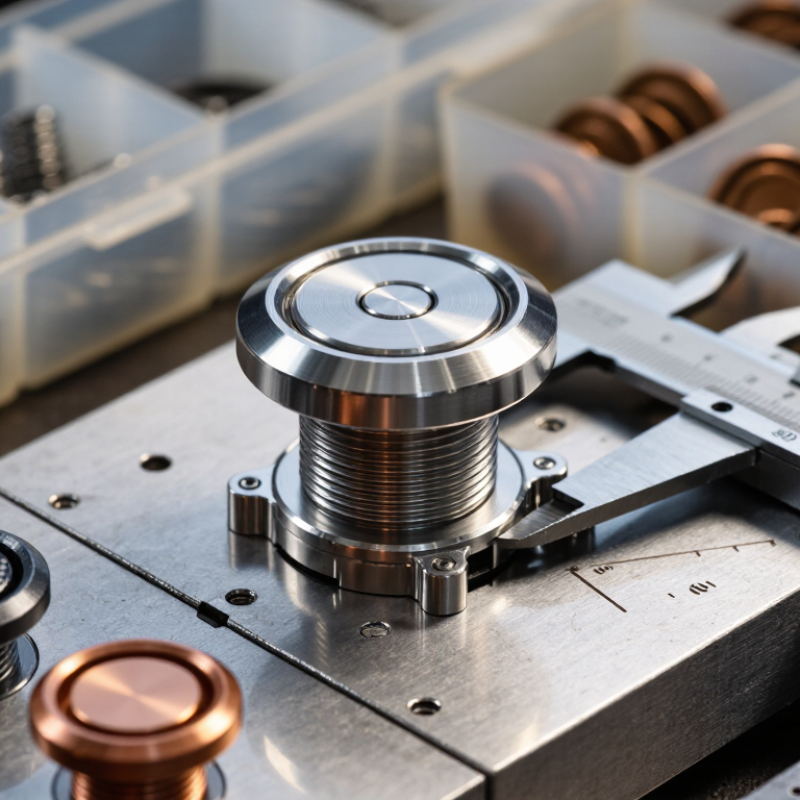
Selecting the best spring-loaded button supplier in China requires more than comparing prices. The button type must match the application. Plunger buttons suit mechanical positioning and limit sensing. Threaded versions provide adjustable installation depth. Panel-mount buttons work well on control cabinets and handheld equipment. Waterproof designs need reliable seals around the moving shaft.
Force ratings usually range from 1 to 50 N. A 1–5 N button feels light and suits small access panels or tactile controls. Medium ratings, around 10–25 N, prevent accidental activation in machines. Heavy-duty buttons may require 30–50 N, especially where vibration is common. The rating should be tested through repeated cycles, not accepted from a datasheet alone. Force changes slightly with spring compression.
Materials affect service life. Stainless steel resists corrosion and feels solid under repeated use. Brass offers smooth movement, while engineering plastics reduce weight and cost. Silicone or rubber seals help block dust and moisture. In practical inspections, check shaft alignment, spring recovery, thread quality, and contact stability. A button can look perfect but still bind after installation. I have seen this happen when tolerances were measured separately, rather than as a complete assembly. Supplier reliability depends on traceable testing, sample approval, and honest force data.
China Best Special Spring Loaded Button Supplier?
A reliable spring loaded button supplier should prove more than low price and polished samples. ISO 9001 certification shows controlled processes, traceability, and corrective actions. The ISO Survey 2022 recorded 1,265,216 ISO 9001 certificates worldwide. Yet certification alone cannot prove stable button force or long service life. Ask for inspection records, batch numbers, spring material details, and contact-resistance data.
RoHS compliance restricts ten hazardous substances in electrical products. REACH also requires communication about substances of very high concern. The European Chemicals Agency listed more than 240 substances on its Candidate List by 2024. Therefore, request current declarations and material test reports, not old templates. For outdoor or industrial use, IP65 resists dust and water jets, while IP66 tolerates stronger jets. IP67 and IP68 require immersion testing under defined conditions. These ratings follow IEC 60529, but test depth and duration must be written clearly. A button may pass one test and still fail after repeated operation. That detail is easy to miss.
Tips: Check whether certificates match the exact model. Request ten samples from different batches. Measure actuation force, travel, bounce, and insulation resistance. Test after salt spray or temperature cycling when needed. Do not accept “waterproof” without an IP report. I would also review supplier responses for precision. Vague answers often signal weak documentation, though this is not proof by itself.
IP ratings shown below use the IEC 60529 characteristic digits. The values are rating levels, not performance scores. ISO 9001 covers quality-management systems, while RoHS and REACH address chemical and substance compliance.
How to read the chart: The first digit “6” indicates complete protection against dust ingress. The second digit identifies water protection: IP65 resists water jets, IP66 resists powerful water jets, IP67 supports temporary immersion, and IP68 supports continuous immersion under conditions specified by the product manufacturer and test agreement.
Supplier selection should begin with tolerance, not catalog appearance. A reliable spring loaded button supplier should state dimensional limits for plunger travel, mounting diameter, and operating force. For example, a ±0.05 mm body tolerance can reduce panel misalignment during assembly. However, tighter tolerance is not automatically better. It may increase cost without improving field performance.
Cycle life needs evidence. Ask for test curves, not only a “100,000-cycle” claim. IEC 60512 durability methods support controlled switching tests, while IEC 60068 environmental methods help assess temperature and humidity effects. During evaluation, record contact resistance, actuation force, travel, and rebound at regular intervals. A practical plan tests samples at 0, 25,000, 50,000, 75,000, and 100,000 actuations. A 2024 industrial switch market assessment projects roughly 6% annual growth, increasing pressure on suppliers to prove repeatable quality. Growth alone proves nothing.
The test fixture should resemble actual use. Use the specified load, alignment, and pressing speed. Check buttons after thermal cycling and dust exposure. ISO 2859-1 sampling can support incoming inspection, but sampling cannot replace engineering validation. One weak point deserves attention: laboratory cycling may not reproduce sideways finger pressure. I would therefore request video records, raw measurement files, and failed samples. Suppliers that disclose variation, rather than hiding it, usually deserve closer technical review.
China Best Special Spring Loaded Button Supplier?
A special spring-loaded button needs more than a polished surface. Its travel, return force, thread fit, and contact alignment must work together. CNC accuracy within ±0.05 mm helps control these details, especially around the button stem and housing bore. Still, ±0.05 mm is not magic. Tool wear, material expansion, and incorrect clamping can quietly affect results.
According to the 2023 Deloitte and Manufacturers Alliance Smart Manufacturing Survey, 86% of manufacturers viewed smart manufacturing as important for competitiveness. This supports the use of digital drawings, in-process inspection, and recorded measurement data. A capable Chinese supplier should verify critical dimensions with calibrated gauges or CMM equipment. Inspection reports should show actual values, not only pass-or-fail marks. That difference matters.
Small parts expose weak process control quickly. A button may feel smooth during sampling but bind after plating or assembly. Practical testing should include repeated pressing, spring-force checks, surface inspection, and temperature-related dimensional review. ISO 286 tolerance principles can help define fits, but they do not replace product-specific testing. Ask for material certificates, inspection frequency, sample records, and corrective-action evidence. Some suppliers may promise ±0.05 mm everywhere; that claim deserves careful questioning. A realistic drawing, stable machining process, and honest measurement history are more valuable than impressive wording.
Choosing the best special spring loaded button supplier requires more than comparing unit prices. Start with the MOQ. A low MOQ supports testing and reduces inventory risk. However, it may increase the unit cost or limit customization. Ask whether the MOQ applies to each specification or the total order. Request samples and inspect button force, surface finish, thread accuracy, and return action. These details reveal manufacturing consistency.
Lead time should include tooling, sampling, production, and inspection. Ask for a written schedule with realistic buffer days. Custom projects need clear drawings, material requirements, spring rate, travel distance, and mounting dimensions. Confirm whether engineering changes create extra tooling charges. A capable supplier should explain tolerances instead of promising everything immediately. That honesty matters. I have seen schedules fail when approval time was ignored.
Tips: Define warranty terms before placing an order. Confirm the coverage period, accepted defect rate, replacement process, and freight responsibility. Ask for inspection records and batch traceability. Warranty language can sound strong but remain vague. Make every promise measurable. One practical weakness is relying on email statements without a signed specification. A simple approval document prevents later disagreement. The best supplier is not always the cheapest; it is the one whose MOQ, delivery plan, customization control, and warranty process match your actual project risk.